Digitization is transforming our life. We are able to communicate at any moment, though we are far apart. We can browse Tiktok and watch live stream videos while shopping, see the doctor and buy medicine without going to the hospital.
However, the digital life we are used to are out of reach in many places. It is demonstrated in the report of ITU Measure Digital Development: Facts and Figures in 2022 that there are still 2.7 billion people in the world without Internet access, the digital infrastructure in some developing countries, especially in least developed countries is still insufficient, and the problem of uneven digital development remains prominent.
It is of great significance to bridge the global digital divide and accelerate the building of the community with a shared future for mankind, when we enhance the capacity of least developed countries through ICT, and make more people share the digital dividend.
Build digital infrastructure for the future and bridge the digital divide
Fiber broadband network is an important component and foundation of the new digital infrastructure. At present, China has built the largest fiber broadband network in the world, and entered into the new stage of development from FTTH to FTTR. However, some underdeveloped countries is still using the ADSL broadband technology with copper wire as the transmission medium.
Confronted with the uneven development of global digital infrastructure construction, Fiberhome, as an important participant of ICT industry in China, is considering about how to take the advantage of ICT to help bridge the global digital divide.
Developing FTTX and propelling more underdeveloped countries to achieve ‘Replacement Of Copper Cables With Optical Fiber Cables’ is of fundamental significance to remove the barriers of effective networking. However, when building the FTTX, these countries will face the dilemma of adopting GPON or XG(S)-PON technology to build the network. GPON has relatively low up-front investment, while high follow-up network upgrade cost; XG(S)-PON follows the trend, but has heavy investment pressure. How to help underdeveloped countries consolidate the digital infrastructure at lower cost, and narrow the gap with developed countries?
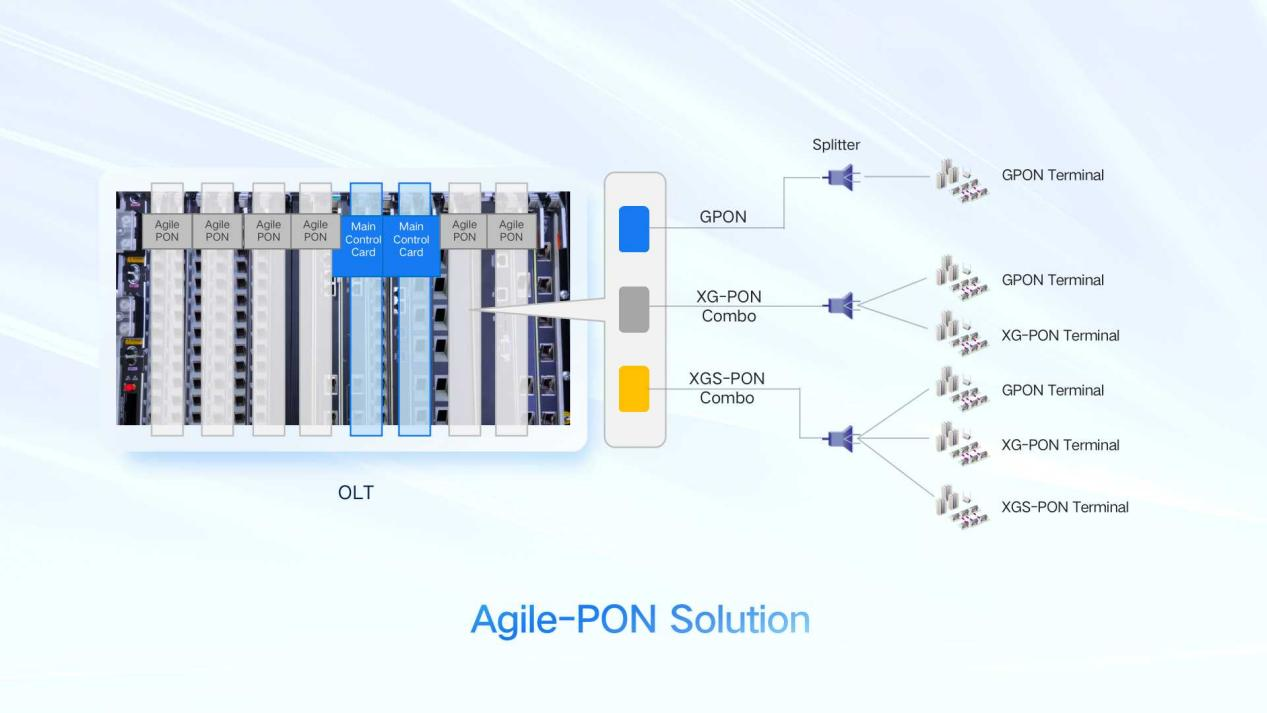
Fiberhome has proposed the Agile PON project, in which GPON, XG-PON and XGS-PON networks are integrated and coexistent. The project helps underdeveloped countries build fiber broadband network meeting current demand with the optimal cost input. Meanwhile, the project reaches hybrid networking and flexible expansion, being able to provide maximum protection of initial investment and meet the requirement for network smooth evolution in the future. Accordingly, it helps underdeveloped countries to build digital infrastructure in the future, bridge the digital divide and promote digital transformation.
Promote more widespread connectivity and build the community with a shared future for mankind
At the present, among the least developed countries, above 75% people are still living in poverty, and about 2/3 population does not have Internet access. The goal of universal ITU connectivity and sustainable digital transformation by 2030 will require addressing many of the barriers to effective networking faced by underdeveloped countries.
In underdeveloped countries, especially remote mountain village areas, network construction is confronted with various challenges, including long deployment span, high construction cost and low network investment return. How to deal with the challenges to make more ‘offline’ people ‘online’ and help underdeveloped countries achieve effective networking?
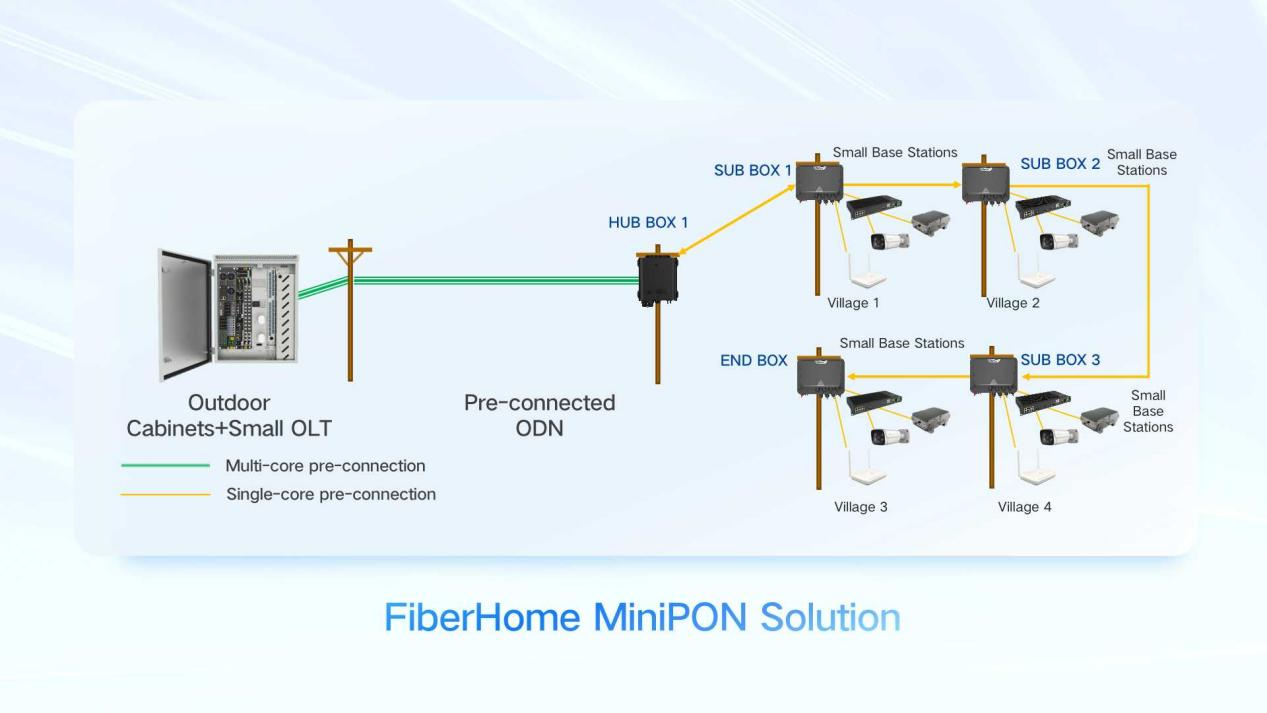
For the traditional network construction method requires the construction of a large area of computer room resulting in high costs, Fiberhome has proposed the MiniPON solution. The solution combines outdoor cabinet and minitype OLT, enable carriers to flexibly choose the holding bar or wall mounting method, which saves the cost of machine room construction. Moreover, it realizes fiber optic plug and play by preconnected network mode, which makes the construction less difficult and more flexible. When building networks in remote mountain villages, carriers do not have to complete all fiber deployment at once as in the past, and can gradually carry out network coverage according to user demand. This enhances carriers' investment returns, shortens the return cycle, increases the incentive to invest in network construction, helps underdeveloped countries improve network coverage and the balanced development of global digital infrastructure, and promotes wider connectivity so that digital technology can benefit more people.
Currently, digitalization has become a global trend and digital technology is of great significance to promote sustainable socio-economic development. Fiberhome will leverage its accumulation in the field of ICT to help bridge the digital divide and promote the goal of connectivity and sustainable digital transformation, makes more people enjoy the beautiful digital life and future equally, and contributes to build a community with a shared future for mankind.